
This is a personal essay on education.
For more, click on a title on the right side of the screen (desktop) or at the bottom (mobile).
Click on menu items at top to explore other genres.
Two years after the pandemic, I had a class with two students whose needs couldn’t have been further apart. In my 21 years of teaching high school English, my most and least capable students sat three desks apart.
Assessing Kaylah was unambiguous. She was unlike most sophomores in standard English classes. I explained the delicate balance between specificity and generality in a thesis statement, and fifteen minutes later, she wrote one that indicated she understood both concepts, that they reside on a spectrum, and then she nailed it. She understood the text in detail, and she could make connections between body paragraphs and the introduction paragraph in the time it took for us to have a side conversation.
As I finished up with Kaylah, I saw Marley’s hand go up, and a moment later, I was sitting on a bright blue, tough plastic stool that I moved around so I could work one-on-one. When I looked at his work, he had begun writing the first sentence of a body paragraph, and I reminded him that he needed to indent. Marley didn’t respond, so I asked him if he knew what it meant. He said “no” and waited for me to explain.
Of course, I was aware that cognitively, Marley was not in the same place as Kaylah, but since he had no idea what indenting a paragraph was, nor did he show any sense that he should know, it made me wonder: Just how far behind is he?
New York Times senior writer Jia Lynn Yang wrote an article in November of 2025 called, “America’s Children Are Unwell. Are Schools Part of the Problem?” In it, she writes, “Some of the support being requested [by parents] — for instance, being allowed to move more, rather than sitting so long – would likely benefit all children. Instead, school districts try to mash individual needs into a system antithetical to them. The sheer cost and logistics of this are unsustainable. Many students who are legally entitled to support do not receive them.”
I would add that the cost and logistics are unsustainable because it requires a teacher to do the impossible. We are tasked with understanding and making educational decisions for children with several disparate circumstances, such as autism, ADHD, trauma, poverty, cognitive abilities, and adolescence, to name just a few. The reason the cost is prohibitive is because we need specialists to address the needs of all children, and they cost money. The reason the logistics are unsustainable is because even a veteran teacher of 20 or more years with two undergraduate degrees and graduate degrees doesn’t have the time—not even close—to create lessons designed for a dozen students with divergent needs. To be an expert in each area requires specific training and education, and since we don’t have multiple proficiencies, we are at best a jack-of-all trades filling our time with the futile task of meeting the needs of 100-120 kids.
It was early in the school year, so while I talked to Marley about what to do next with his writing, I scanned the catalog of possibilities in my head for effective strategies. I held my eyes on his computer screen to hide my incredulity at everything this one missing bit of knowledge could mean because, by this time, I suspected it meant a lot. I didn’t want my surprise to be obvious, because it might have led to Marley feeling shame. If I shamed him for not knowing, it could dent his dignity. Preserving our students’ dignity is paramount.
I wondered whether his 9th grade English teacher hadn’t done his or her job, but we had a strong department, so I quickly dismissed that. It was more likely they did their job, but Marley didn’t pay attention. That didn’t fly either because Marley was nearly always on task; he made steady eye contact, and if he had something going for him, it was his willingness to advocate for himself.

I considered documented possibilities. The boy was not on a legally binding individualized education plan, or IEP, and he hadn’t been diagnosed with a learning disability. That doesn’t mean one shouldn’t have been developed for him, only that I didn’t have that information handy. He wasn’t on a 504 plan, so ADHD and autism were not likely, and he didn’t miss class very often, so chronic absenteeism wasn’t the culprit.
Without a documented explanation, I had to contemplate the earlier part of his education, like 5th or 6th grade, when he was away from school because of Covid. What did Marley know, and what did he miss? How much did I need to simplify my vocabulary to increase his chances of understanding what I said next? An indent isn’t just a space at the beginning of a paragraph for which I could point to the “tab” key shortcut. Combined with other clues, I suspected he’d need much more. I had to explain the somewhat complex concept that indenting was an indicator of something to come, a statement to communicate to the reader that a new idea had started. It’s a boundary marker to declare a new truth or argument, different but related to the last.
This was a post-pandemic problem, trying to figure out where to go with the instruction when a 10th grader didn’t know what s/he typically did by middle school or sooner. Before the pandemic, I rarely came across this particular issue. Students might not have known what it meant to indent, but a simple explanation usually clarified it for good. Students might write poorly, but they knew how to indent. They may have known how to indent but not bother to do so.
If he didn’t know the larger purpose of indenting, then he may not have known what constitutes a paragraph, or why we organize it in a specific way. Did he get through 9th grade without understanding, for example, the necessity and function of a quote to support an argument? Did he know what an argument was in this context? I had taught the same things for 21 years, so I could reasonably assume that almost every student entering my class understood the basics of a body paragraph. If they didn’t, they’d catch on within a few weeks. I went to another part of the room to grab a fill-in-the-blank graphic organizer with instructions for each part of a body paragraph.
Perhaps the lapse was caused by the year-and-a-half learning lag during the pandemic. Nearly every student in America (and likely elsewhere) lied in their beds four days a week for a few minutes after waking up, logged into their online classes, got the information they needed, interacted with no one, scrolled on their phones for a while, fell back to sleep, and received a passing grade. As a teacher and human being, online teaching was horrific, but as a function of the public school system, there was no alternative. There simply weren’t the human resources needed to visit homes and ascertain which kids had a working computer and which ones didn’t. If they did, who had internet access and who didn’t. Whose families could pay their electricity bill and whose computers remained dark. Whose families had an adult in the household pulling them out of dreamland and fixing them breakfast and lunch, and who had an adult inviting the dealer in for a score or popping open a half-pint of Mohawk Vodka.
The stagnation provided time and space for millions of young people to become addicted to their phones so, often, it wasn’t only the time missed that created problems as much as it was the developing minds of children falling victim to the Instagram Reels doomscroll. Maybe this happened to Marley during 6th and 7th grades. Presumably he had been in physical classrooms in 8th and 9th grades for the past two years; surely someone had explained paragraphs and why we indent them.
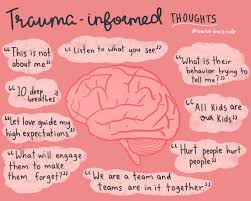
I decided that the pandemic was only part of the explanation, and I had to explore other possibilities. Teachers are nominally trained to look for signs of trauma so we can be cognizant of our body language and word choices, lest we trigger a child’s open or buried emotional wounds. Flippant comments about abuse or suicide could strike at least one kid in hurtful ways. Maybe he was being or had been sexually abused at home and could care less about how to organize a paragraph to illustrate that Edgar Allan Poe builds characters using irony. For all I knew, he hadn’t cared about what any teacher said in years.
Marley was a 15-year-old who looked 13, with a blank trust beaming from his eyes. He still had a layer of baby fat that puffed up his reddened cheeks. It was still only the first quarter, so I couldn’t be sure whether he had suffered abuse. It was always a possibility, but I ruled that out, too. It wasn’t that knowing would help me figure out how to help him write, but at least I would know what might be at the root of his struggles. But his demeanor gave off vibes of a sheltered child who was pampered by two relatively stable adults. His neutrality in most things indicated the privilege of a soft and predictable home life.
I considered whether Marley was tired and distracted because he was kept home to support his family by working, buying some groceries, and caring for the little ones while his mother worked the late shift at FedEx and served breakfast at IHOP in the mornings. But for similar reasons, I discounted that, too; I decided that he didn’t have the confidence in his posture or expression to take on a family leadership role of that magnitude. Hector in 2nd period on the other hand, he had that edge. He missed school frequently because, he told me in a hallway conversation, he was helping his mother manage the family by working late. Marley was not Hector.
Maybe he was on his phone every night until 3 o’clock in the morning, masturbating to pornography, and handily losing the battle over his brain’s basic functions, so by the time he got to my class—depleted of dopamine, physically worn out, exhausted by sleep deprivation and shame—he was lucky, or I was lucky, if he heard one in five words. Since the pandemic, the number of students who slept and slouched went up from one or two per class to sometimes as many as eight or nine. I could look out to see 24 students, and one-third of them had decommissioned themselves with late-night hours of screen time. It was obvious because three phone calls home and 12 one-on-one conversations did nothing to change where they laid their heads. The number of students who would not and could not keep their heads off their desks either from depression or sleep exhaustion had at least tripled. But again, I had discounted this because Marley was alert, even in the face of a 7:45 start time.
In the case of Kaylah and Marley and what separated them, I had to draw a rather uncomfortable conclusion, something that isn’t an explicit conversation. His challenge hadn’t been documented; it wasn’t a sign of common 21st century tech addiction; and it wasn’t any of the speculative life circumstances either—at least as far as I could discern.
My conclusion is taboo to say out loud: Marley lacked intelligence. Kaylah had high intelligence. We use phrases like “cognitively deficient,” or “cognitively impaired.” It means the same thing as “not intelligent,” but the word “cognitive” doesn’t hold the same social weight. Don’t tell a parent their child isn’t smart, even if they know it. Don’t tell them s/he lacks intelligence. Say this instead: “Your child’s IEP indicates that he is cognitively impaired,” and then you have a conversation about what kinds of modifications and accommodations can be implemented. It’s still unfortunate, but its euphemistic language softens the discussion.
Kaylah had all the skills of an advanced student and the intelligence to make use of instruction designed for university courses. Conversely, Marley deserved an IEP, in addition to a self-contained reading class, and perhaps some tutoring. These well-deserved changes in the amount of support for Marley are costly, though.
It wasn’t merely that he didn’t know how to indent or that he missed valuable steps in his education. After Covid hit, half of my students had similar gaps in their learning. When I explained to Marley the function of indenting and how it relates to the argument in his first sentence, he went blank. I simplified my language and broke it down into achievable steps. I demonstrated using the graphic organizer that evidence must support the argument, and then I framed it with a leading question: “If your argument is about diction and tone in Poe’s short story, what should your evidence from the story support?”
He replied, “The claim?”
“No, diction and tone,” I said in my head to myself. I bit my lip and tried to find another way.

I had also given whole-class instructions on these terms. I know that IQ tests don’t typically tap into several other kinds of intelligence–numerical, kinesthetic, musical, spatial, among others–so I can only attest to his performance with English language arts. Before the pandemic and social media, I could get the same concepts across to most or all students quickly, and the rest of the year was spent learning new concepts and improving their analyses.
While Kaylah had above-average intelligence, I had estimated that Marley’s was below average. And why not? Isn’t intelligence like every facet of human experience? Every imaginable skill, desire, and genetic predisposition lies upon a continuum. He may have been able to read the expression on my face well enough to know he had failed the moment, suggesting abilities with interpersonal skills, and still not have the intelligence needed to process language spelled out as clearly as 1, 2, 3 and a, b, c.
No matter the explanation, on that day, sitting on the bright blue, tough plastic stool, I realized: I have no idea how to help Marley. I tried several approaches, used simpler vocabulary, visuals, manipulatives, and organizers, and broke the task down into smaller parts. By the time I got to the fourth iteration of the same instruction, he couldn’t connect the smaller tasks together. Eventually, I accepted my failure to be able to help him. I had to either walk away to help another student or help Marley and neglect the rest of the class for the rest of the period. I picked up the blue stool and sat with another student.
The problem was not caused by a lack of information in Marley’s head; he didn’t have a known learning disability; over time I learned that he hadn’t suffered trauma; and signs of staying up too late the night before didn’t surface. What Marley needed was more time. He needed more 1:1 attention. The school district needed more money to pay the people he needed to take that time and give that kind of attention. Logistically, I have 25 other students in that room; I didn’t have the time, nor did anyone else in the building, especially since he didn’t have a documentable learning disability. There never has been enough money federally, statewide, or at the district level to hire enough people to commit to addressing Marley’s–and so many others’ life circumstances.
A teacher must speak with clarity by changing our approach and vocabulary from Kaylah to Marley, and adjust it seconds later for a boy on the spectrum, and again for a girl with the apathy of stump because she doesn’t see the point in all this, and again for the shy girl fighting through an array of emotions because every morning she leaves a house of cruelty or despondence. Teaching 20 or 30 young people in one room how to write a paragraph is not terribly difficult if they are all intellectually, emotionally, and socially typical, and they haven’t devoted the previous night to the wide-open Internet. But they’re not.
After hundreds of hours of professional development and several dozen graduate credits earned to remain certified and further my education, I sometimes stand in my classroom like it was my rookie year, like I did with Marley. Whether my assessment of his intelligence was accurate or not, it illustrates a single convergence point* of decision-making in the expansive scope of our students’ lives that educators consider before deciding what to say and how to say it—dozens of times each day. These are convergence points that educators frequently did not commonly understand, or in some cases have any consciousness of, during most of the last 100 years of public schools.
Only in the last 30 years has public education moved to a student-centered model instead of hiring single authority figures to lecture rote information like a cement mixer pouring water over powdered sand and limestone. While the laws had expanded substantially to address children with learning disabilities and other obstacles in the 1970’s, there weren’t mechanisms of accountability until the late 1990’s. Autism, for example, wasn’t taken seriously until then, and it took until 2004 before states were required to report on the progress of children with disabilities.
While public education has laboriously improved over the decades, what nonetheless remains from the early part of the last century is the structure of our schools and classrooms. We still employ massive places of learning, a 30:1 teacher-student ratio*, rigid bell schedules, and narrow focus on financial results to the detriment of social responsibility, long-term sustainability, inherently flawed measurements of success, and the welfare of our children and educators. It’s the same structure established during the height of the Industrial Age in the late 19th and early 20th centuries, which evolved from an unnatural, mechanical, and uncompromising ethos of industry.
If that sounds like the description of an automobile factory, that was the idea. Former President Obama’s US Secretary of Education Arne Duncan pointed to it on the government’s website in 2010:
“Our K–12 system largely still adheres to the century-old, industrial-age factory model of education. But the factory model of education is the wrong model for the 21st century3.”*
Assembly lines for manufacturing are efficient for the creation of identical, inanimate objects, but it wasn’t meant for educating youth who arrive each morning with unique backgrounds and needs. A hundred years ago, children, like automobiles, were subject to the monotony of factory lines. Whether you are 19 or 99, we all went to school, obeyed the bell, sat down, stayed quiet, and did our work. We obeyed the bell again, walked to the second class, sat down, stayed quiet, and did our work. Or we dropped out. How many grown adults could do this for 13 years? How many adults want to do this? Why do we expect a smile and a nod from children when we know it’s untenable for us? As adults, most of us insist on work for which we keep our dignity intact. Young people want the same thing, but they rely on us to give them that opportunity, that dignity.

More than a hundred years later, we have clung to the exasperated industrial ethos, and now the Information Age is upon us like a riptide, sucking us into its bedrock. New research is well understood. Smartphone and social media addiction is pervasive, our children’s attention spans and academic endurance have shrunk, mental illness and suicide rates continue to increase, and dopamine bursts multiply. Finally, it must also be said that the new federal government offers no solutions and instead has revoked funds that were specifically designed to help the most vulnerable, like Marley. They have promised more gutting from the Department of Education.
Still, states continue to double down on the same curriculum, the same cold calculations of academic success, the Pavlovian schedules, and the same physical structures for learning spaces.
Early in my career, right before a staff meeting in the school library, a veteran math teacher said: “Every year, they add one more thing, but they never give us more time or pay us more.”* At the time, starry-eyed, I told myself he was jaded and had only exposed that he was unwilling to adapt to change. But the longer I’ve taught and the more I’ve researched education throughout the last century and the factory model on which our system is based, the more I understand that my inability to serve Marley was inevitable. It’s like asking a pilot to fly to two destinations at once. If it wasn’t Marley and his questionable cognitive abilities, it would have been Samm and his place on the spectrum. If not Samm, then Arden and his ADHD, or Alvonte’s chronic absenteeism and her family’s battle with addiction, or Lucia and her language barriers.
Educators did the right thing by parsing out the dozens of significant needs that our students demand*. The IEP and 504 plans are worthwhile mechanisms of accountability. Increasing the number of counselors per child is evidence we are paying attention to trauma, abuse, and addiction. Adding instructional assistants to the staff and offering students with learning disabilities closer to a 9:1 teacher-student ratio is money well spent. It’s also true that every time we add another convergence point to a teacher’s list of responsibilities in the education of 120+ students, the cost and logistics become less sustainable. These are responsibilities that teachers welcome as much as the pilot is willing to fly to both New York and Chicago. It’s not the individual tasks that pilots object to; rather, it’s the impossibility of the task.
Public education in America battles every day to maintain social norms, psychological well-being, administer justice, nourish a light heart, encourage individuality, foster decency, and value the lives of millions of young people passing in and out of our classrooms. That is a short list, because there isn’t space in this essay to point to the ways that teachers defend students from the bigotry that is inherent in any society but is seeing its protections rubbed out. We educate our young people in language so they can function as adults, numbers so they can solve adult problems, a broad variety of electives to expand their interests, and history so they’ll know where we’ve been and where we’re going.
American education needs to break the ethos developed during the Victorian Era* and turn to one rooted in the Information Age. Young people deserve to be asked what they need to thrive as adults—and adults owe them the dignity of listening. Youth is capable of taking the lead on their curriculum. Everyone needs learning spaces that are conducive to enhancing their sense of self. Education can follow the path of modern-day business and re-open the times and days that school is mandatory. Children need clear and wide and relevant lanes toward adulthood, and we need to follow the research of the last 20 years or so and what most people know instinctively: if we give young people voice, agency, and respect, they will want to learn. Treat people with dignity first, and you’ll struggle to find anyone who will fight your educational program.
I would argue that if we put dignity in front of all other priorities, the curriculum, assessments, rigor, and student engagement will follow. But maintaining centuries-old structures and ethos isn’t that. They never were.
If you love slots, this is the spot. The bonuses are actually useful and not just bait. Big shoutout to brslotmestre for the great experience.