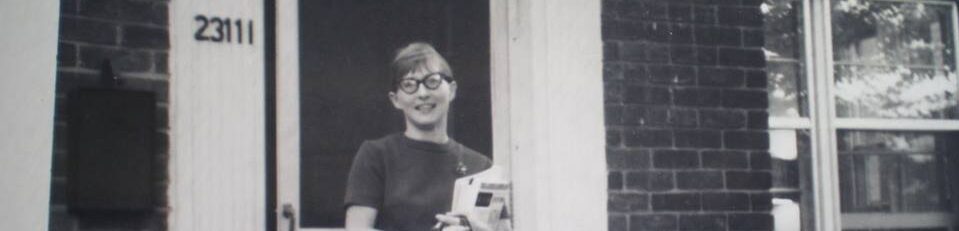
An Essay
Damon | 1975-79 | Ferndale, Michigan
During the 70’s, kids under 10 could leave the house on a summer morning and wander anywhere on bike or foot within a mile or so “until the streetlights came on.” My friends and I went back and forth from each others’ houses or to a school or park. We had snowball fights, knocked on strangers’ doors and ran, and on occasion, filled a bucket with perfectly sized throwing apples from my back yard at cars traveling on Nine Mile Road.
We had good arms, too. Between Mike, Bird, and myself, we’d throw four or five each from a distance of about 100 feet and hit a car waiting at the red light at Republic multiple times. Whap! Whap! Whap! Whap! Whap! All in quick succession, filling are hearts with adrenaline. We didn’t wait around for a response, as the percussion of sheet metal was our joy. We ran through a tall set of bushes, make our way across the continuous, non-fenced backyards of seven or eight houses, and dip back out the other side in about 15 seconds. By the time the driver waited for the light to change, we were just three kids kicking around the neighborhood, nowhere near Nine Mile Road. Our education about how to behave without adult supervision was not consistent with any of our parents expectations, and yet it was guilt-free and fun.
In our travels, we crossed paths with all manner of people, some of whom had serious physical conditions. We were left to childhood guesswork and temperament to figure out how to interact. Why does that guy walk like that? “He’s retarded,” that’s why. It was a catch-all phrase for anyone who couldn’t put on a mitt and chase down fly balls or wrestle around on the grass. It was the only language available to us to describe people with disabilities.
There was Ken, a lanky man whose only impairment was obvious: he had no left arm. He was in his 60’s, maybe older, and wore a tweed jacket that hung from bony shoulders as if on a hanger. He dressed the same regardless of the weather. Out of his right sleeve hung a rubber hand with the fingers curled up like it were formed to knock on a door. By the way it dangled, we could tell that its only function was to hang at the right length to pose as a hand.
Occasionally we’d run into him on his walks, and he’d stop and chat with us. A cigarette seemed to be a permanent fixture in his good hand, which created permanent tobacco stains. He would put his cigarette in his mouth and give us tips on how to wind up and pitch a ball, sometimes using the ball we were carrying to the park. We could tell that in his day he had played baseball by the way he mimicked pitching. “Don’t talk to strangers” came up as a joke among us, but eventually, Ken became familiar, which could have been dangerous because he had earned our trust. I asked my brothers if they remembered Ken, and they both remembered him similarly. My brother who is four years older said that “There were reports of something bad with children, which I think was bullshit, people imagining stuff because he hung out at the ballparks. I just think he was lonely and liked baseball.” But I only remember Ken for being friendly. We never asked and he never offered an explanation for his rubber hand.
There was Gary, who I’ve since surmised lived with cerebral palsy. He toured the neighborhood fairly regularly riding a yellow Schwinn three-wheeler with a big metal meshed basket in the back that sometimes had a bag of groceries or a couple gallons of milk. Guessing now, he was a young adult in his early 20’s. Or maybe he was in high school, but since public schools resisted or denied people with disabilities, he may have been homeschooled or attended a private school. He’d pass by riding his bike in the street and smiling wide, saliva spilling from his mouth, and uttering what were probably full sentences in his head. All we heard were grunts and failed efforts to articulate words. One time we had stopped long enough for Gary to get the sentences out. It was laborious, and we didn’t know anything about his condition, his intelligence level, or anything meaningful except that he had also had a kind and friendly disposition. Eventually we learned to keep it simple and say, “Hi, Gary,” and keep moving.
We had heard that Gary was an especially smart person, but as kids, we weren’t sure how that could be. His appearance disrupted that notion, so when me and the brothers and friends “acted retarded,” we mimicked Gary’s arms and legs, pretended to drool, and stumbled through the pronunciation of sentences. Our knowledge of cerebral palsy didn’t exist.
There was “Crazy Lady,” who was a short, olive-skinned older woman who walked those same streets, talking to herself. We’d cross the street to avoid her, but as we passed on the other side, her volume increased and her monotonous mumbling took on a more argumentative tone, or so it seemed. She swore and barked out irritation. In retrospect, and again I can only guess, she likely had Tourette’s syndrome and maybe suffered from mental illness. Like Gary, we had no language for her behavior, and so we had no idea what to make of her. When we were far enough away, we mimicked her, too. People told horror stories about her, saying that she had committed heinous and violent crimes, but like Ken, it was almost certainly gossip and hearsay.
Then there was a boy about our age named Damon. He lived with his family across the street from Roosevelt Park. He often pushed his way into our ball games, so we saw him regularly. He could stand on his porch and see picnickers, baseball games, kids playing tag, dogs running around, and frisbees flying. He probably saw me, my brothers, and friends walking with our mitts and bats, or a Wiffle bat or two, wearing Adidas shorts and hats, fast-walking and talking and deciding on teams.

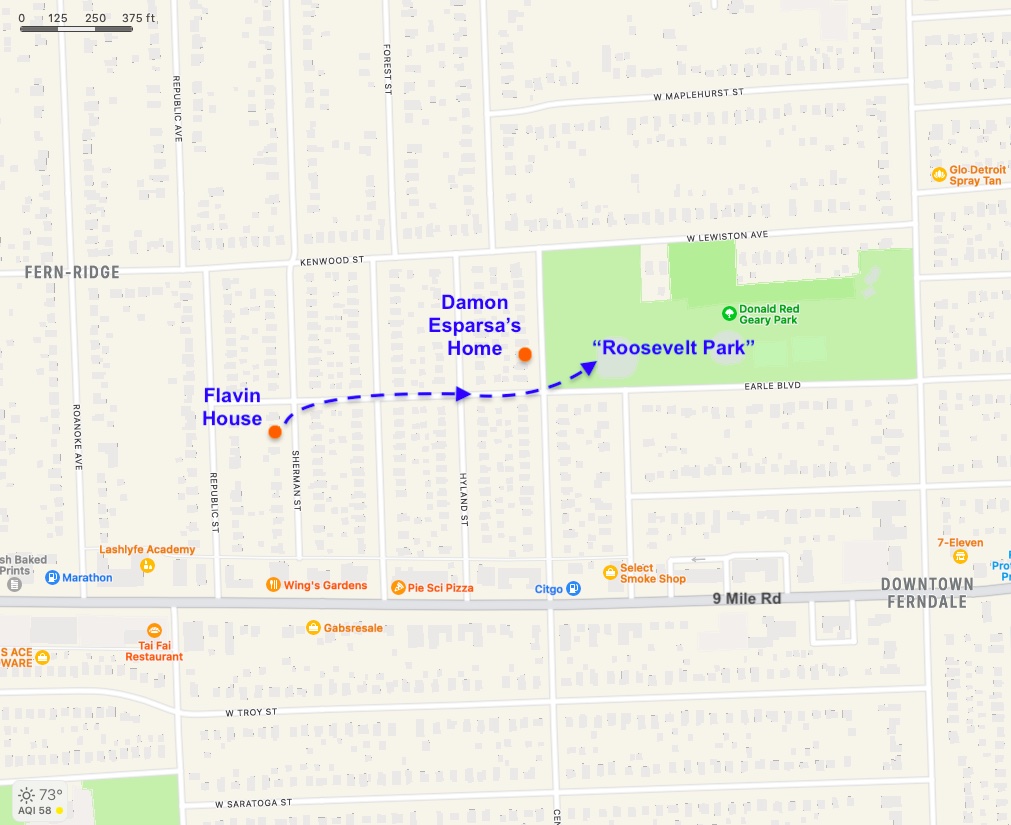
Damon had Downs syndrome, and one thing we thought we knew about him was that he wasn’t going to live past his teen years. I remember looking at him and thinking, He could die right now. He might just stop showing up at Roosevelt Park. He was bigger and more aggressive than I was, so with or without my big brothers around, I didn’t mess with him. He was too much of a mystery, seemingly unafraid physical conflict, and somewhat imposing next to my scrappy little body.
We’d only see him when we chose Roosevelt Park to pick up a game of baseball or football. Most of the trees lined the streets or covered the playground, so the beating sun kept the grass short and brown. Everything, including the ball fields, was compacted because it would rain, harden, rain, harden until it baked into dusty rock.
I don’t remember a time that Damon didn’t ask to join in our ball games, no matter the sport. We always tried to persuade him that it was best if he didn’t play with us, but he never conceded and walked away. He wanted to belong and faced resistance nearly everywhere he went. I can’t be sure how other kids treated him, but because Damon’s older brother Brian and my oldest brother Paul were on friendly terms, with or without Down syndrome, we tried a little harder to include Damon than we wanted. Plus, when we tried to deny his participation, he quickly got frustrated and lost his temper, so path of least resistance meant we mostly included him..
Damon was round and plump. Despite being 12 years old and his family being mostly blond, he had black hair and an occasional gray strand or two. Like other people with Downs, his eyes had a sleepy look with intense, dark brown irises staring out from under heavy upper lids.
He stuttered: “C-c-c-can I play?”
The reality of our ignorance was that we had no idea how smart Damon was or wasn’t. We couldn’t get away with telling him a wild fib. “I think I hear your brother calling you,” one of us might say. “I should go probably go see what they want.” Or we’d try logic and say something like, “Sorry, man, we’ve got even teams. If you can find another player, then you can play.” We knew he wouldn’t find anyone because if they were around, they’d already be playing. We’d try the same excuse even when we did have even teams, hoping he might not figure it out. He’d start counting us with his index finger to see if we actually did have even teams. “Oh, shit. Here we go.”
After he finished, he might give us the finger with all his other fingers tightly packed together, and say, “F-f-fuck you. J-just l-l-l-et me hit.” Sometimes Damon would step forward and for the bat. Whoever had the it would hand it over. And just like that, he was in for at least a game.
By 1979, around 7th and 8th grades, Damon started showing up with his friend Saul, which eliminated our bullshit excuse about needing even teams. We’d put Damon on one team and Saul on the other. Saul didn’t have Downs, but some other unknown special needs that we also had no language for. He was as eager as Damon was to swing the bat and chase down balls. Saul was always cheerful and positive and had some ability to hit the ball, but the cold reality was that we didn’t want either of them to play with us because they weren’t very good.
Sadly, the only Damon we ever got to know was the stuttering “fuck you” Damon who often made us uncomfortable if only for the mythical fact that he could die at any moment and, importantly, he looked entirely different from anyone that any of us knew, and we never really knew why.
My mom told us that “he we was a mongoloid.” I don’t know if she knew the term Downs syndrome, or that it meant he had a genetic disorder caused by the presence of an extra copy of chromosome 21, but she was as conscientious as they came. It’s possible she knew all of that and more, but since it was the term that America’s medical community still used in the 1970s, she used it. Had my mother known, we would have known, but nobody in my circle seemed to understand.
Baltimore | 2025
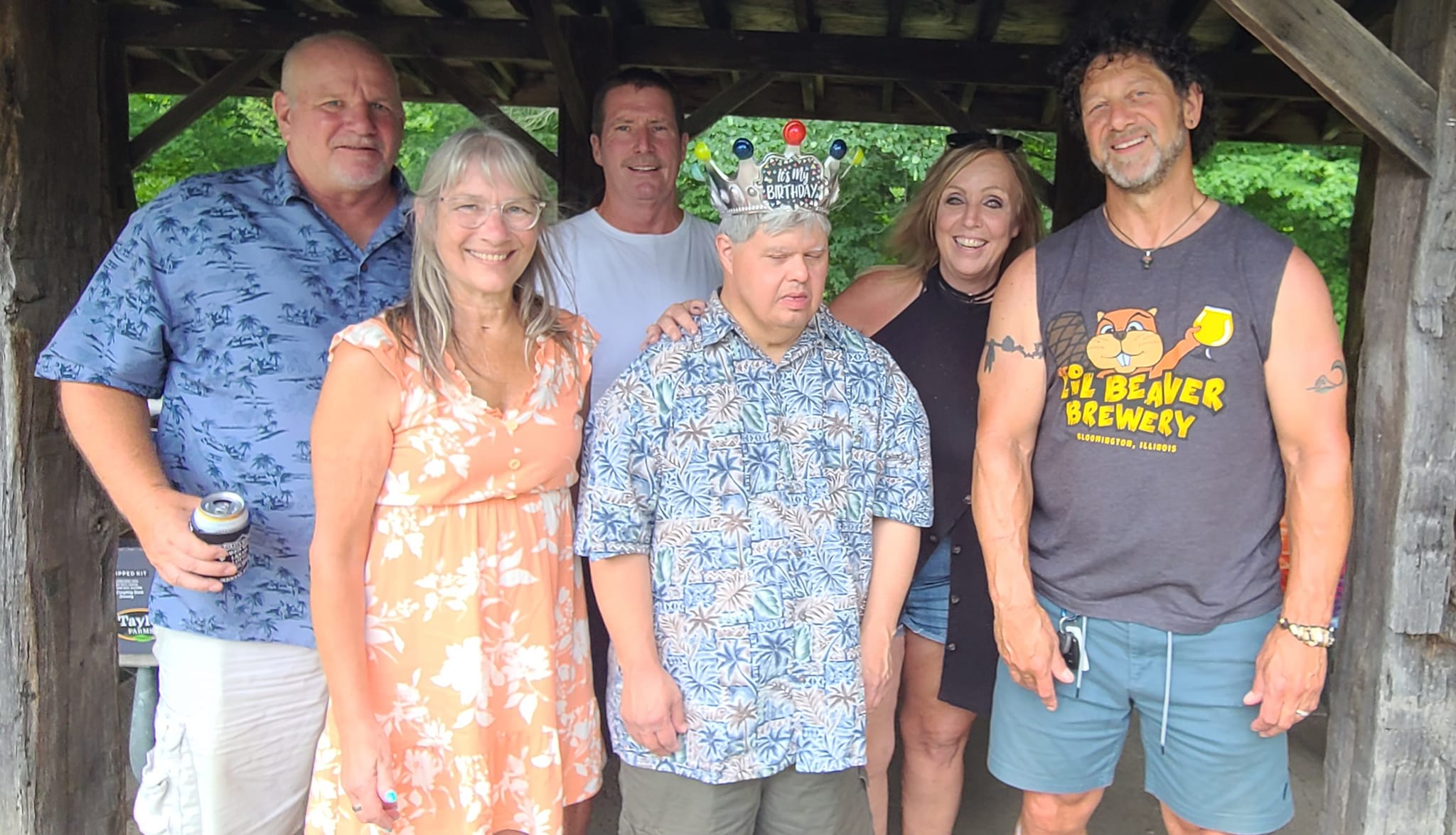
My wife, Kim, was a teacher and social-emotional learning specialist for Baltimore County Public Schools. She worked at Battle Monument, a school for students aged 3 through 21. Her students were the most severely disabled kids in the community. They might be blind, deaf, or nonverbal. Some couldn’t walk or or speak or go to the bathroom by themselves. She had students with Down’s syndrome, autism, and medical needs so severe they often feared that one of their students wouldn’t live until the end of the school year.
When I met Kim, I had been a teacher for 12 years, but I had never thought about how we educate America’s most challenged young people. Early on in our relationship around 2018 or 2019, when Kim told me her work stories, it dawned on me: Jesus. So this is what modern American society does for kids with severe disabilities.
Paris | 600 Years Earlier
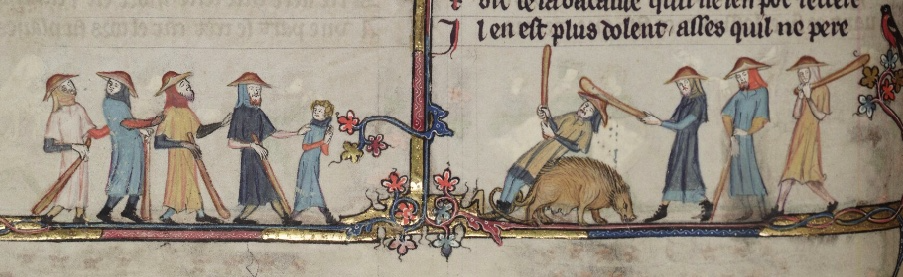
By Flemish illuminator Jehan de Grise and his workshop, 1338-44 | From The Romance of Alexander in French verse, with miniatures illustrating marginal scenes of everyday life.
(Click for full-page view and source)
In 1425, an anonymous chronicler details a “game” that was played with blind people:
“Note, the last Sunday of the month of August there took place an amusement at the residence called d’Arminac in the Rue Saint Honoré, in which four blind people, all armed, each with a stick, were put in a park, and in that location there was a strong pig that they could have if they killed it. Thus it was done, and there was a very strange battle, because they gave themselves so many great blows with those sticks that it went worse for them, because when the stronger ones believed that they hit the pig, they hit each other, and if they had really been armed, they would have killed each other. Note, the Saturday evening before the aforementioned Sunday, the said blind people were led through Paris all armed, a large banner in front, where there was a pig portrayed, and in front of them a man playing a bass drum.” 1
That was France toward the end of the Middle Ages and nearing The Enlightenment. Most of the Parisians who might have handed sticks to the blind for the sake of public entertainment had almost entirely contemplated its cause in a religious context. While that in itself seems counterintuitive, Europeans in 1425 weren’t stupid so much as they were ignorant, not entirely unlike we were in in 1976 referring to Damon as if he were another species of human. They had a sadistic streak that wasn’t unique to the Middle Ages either; rather, there were fewer consequences for cruel and unusual punishment and certainly nothing written in a national constitution prohibiting it. Whether they were literate or not, religious or not, the common explanations available to understand why a person would be born blind–or with any serious impairment–were constructed by the Catholic Church. Their understanding was neither scientific nor accurate.
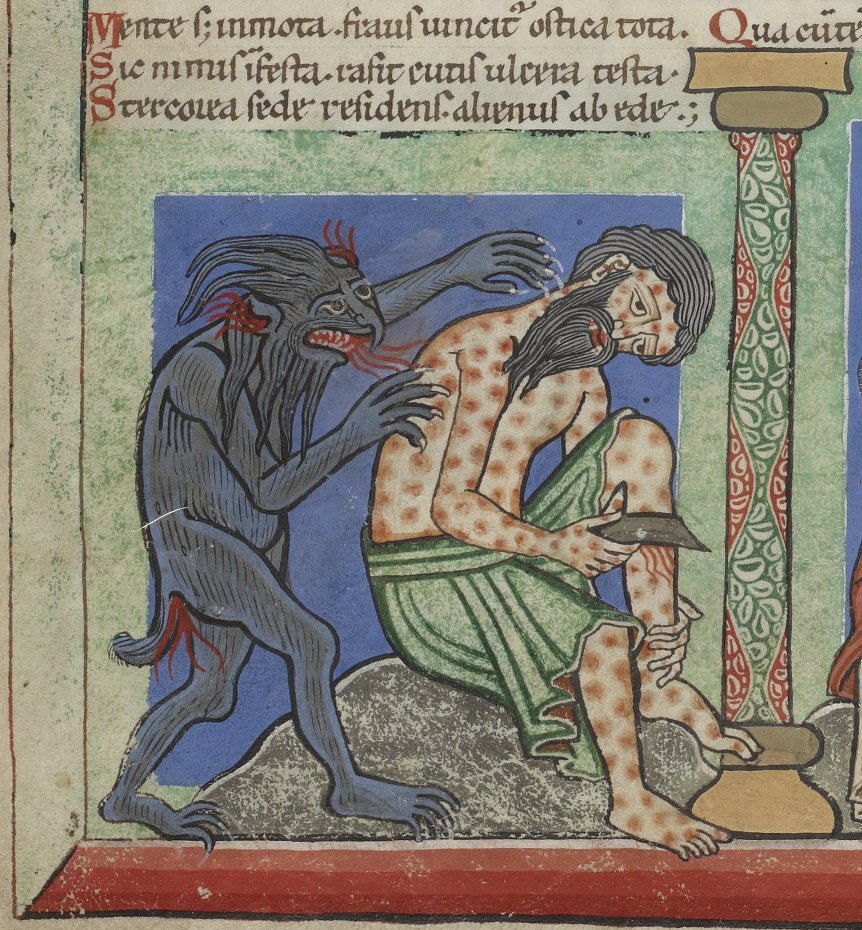
(Public Domain)
In other parts of Europe, some believed that those who lived with unexplained severe disabilities were closer to God because they were suffering purgatory on earth. If someone was born without a limb, suffered mental illness, contracted leprosy or had any other permanent impairment, they would go straight to heaven.
In the 14th century, others believed Satan was involved in the cause of leprosy. It wasn’t enough that they suffered pus-filled lesions over their entire bodies, or that nerve damage would lead to muscle weakness and disfigurement. Seven hundred years ago, religious presumptions prevailed and germ theory wasn’t a thing, so microorganisms never came up anymore than congenital defects did in 1976. Instead, it was believed that lepers, being controlled by Satan, avoided cure in order to infect water fountains and wells. Satan’s real-time presence was so concrete that they were known to gather lepers in groups, tie them to a post, and light a fire under their feet.2
Today, it’s a mildly contagious and curable disease.
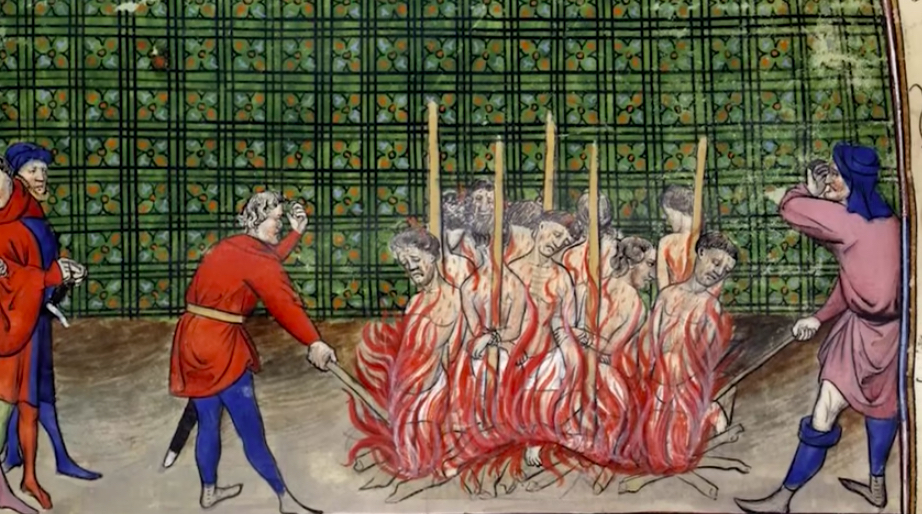
Taken from f. 56v of Chroniques de France ou de St Denis (from 1270 to 1380). Written in French.(Public Domain)
In 2025, we think we had it bad because the misinformation machines separated cognitively impaired Americans from the general population to make them believe almost anything, including that long-established vaccines created to avoid serious disability were instead a threat to their health, despite ubiquitous access to facts and other useful bits of information. That is bad, but in the Middle Ages, people seeking an education for the unknown had a narrow menu of otherworldly rumors–stemmed by either good or evil–that no one was allowed to confirm or deny. One could have been hanged for denying the prevailing Christian doctrine. Even if a person had privately denied the existence of God and saw the world around them at face value without ascribing every fortune or misfortune as the responsibility of God or Satan, that kind of out-loud reasoning was perilous. Therefore, the word-of-mouth from peasants didn’t stand a chance against the capital “W” Word that came straight from the Vatican, which came straight from God Himself. If the Pope said burn the lepers, it was because Satan was present and God approved.
At Battle Monument, however, nearly every one of Kim’s co-workers understood the symptoms of their students’ conditions, even the least educated of them, and even the most religious. Everyone understood there was a scientific cause.
In her first week of the 2025-26 school year, Kim came home with a bite wound on the palm side of her thumb and a shoe rubber burn mark on the back of her calf from a student who kicked her. Sometimes her students felt frustrated by their inability to articulate their thoughts or needs. More than once, she had to dart away from a child because he was 6-foot 3, 275 pounds, and not feeling ready to “use his words.” Sometimes bodily fluids were flung, spat, or eaten, so sometimes Kim had to shower as soon as she came home.
Popular entertainment like Monty Python’s The Holy Grail or Shakespeare’s Tragedy of Macbeth have handed us limited but vivid images of the the Middle Ages, as if it were 24/7 torture, murder, and cruelty. One to five percent of the European population was able to read and/or write. Despite their bad press and limited literacy, there were intelligent and compassionate people.
At the end of the 12th century, St Francis of Assisi said, “Your God is of your flesh … he lives in your nearest neighbor, in every man.”3 He spent most of his days caring for people with diseases or disabilities. People that no one else cared for. In a time of widespread ignorance, he and countless others across all centuries in the Middle Ages actively led programs to help people with permanent impairments. Adam Davis, a Medieval historian and professor of history at Denison University, writes, “By the 13th century, hospitals had become one of the most popular recipients of charitable bequests. In a number of regions, well over half of testaments, left by people from all cross-sections of life, included bequests for hospices, hospitals, and leprosaries (quarantined houses for patients suffering from leprosy).”4

(Public Domain)
The lack of a formal education and intelligence are two distinct qualities. Many people living between 500 and 1500 AD found fact-free amusement in giving the literal and proverbial stick to the blind so they would crack each other’s skulls, but plenty of others stayed home and talked, or went for walks in other directions, or spent their days and nights at churches and hospitals caring for the less fortunate.
Today, 99% of people living in developed nations can read and write and a public education is mandatory. Yet, we see violent crime on the news, rising instances of hate crimes and bullying, police brutality, and the celebration of immigration raids by masked federal agents who collect people and send them to the other side of the earth. Given that the Middle Ages wasn’t entirely populated by shitty people and literacy rates was the inverse of modern literacy rates; and given that our contemporary world still hosts torture, murder, and cruelty in spite of widespread education, it’s easy to see that treating people well is not contingent upon one’s ability to read and write.
Ignorance, religious misinformation, and despicable cruelty by monarchical sociopaths were notable features of the Middle Ages in Europe, but the hard work and commitment of those who cared for people living with permanent impairments were also pervasive. The Middle Ages are like pit bulls that rip tendons from of a people’s arms in a few seconds: The damage is so great that it’s easy to forget that the breed is mostly intelligent and sweet. Both are true.
What makes a people care for those who cannot care for themselves is a question of intervention. In the Middle Ages, it was religiously devoted Christians, volunteers, or maybe the promise of an eternity in heaven. It was survival that prompted some people to welcome free meals and a place to lay their heads as reasonable compensation. And, of course, many people had empathy for others.
In modern-day America, caring for and educating people with severe disabilities is mandated. In the same year that America finally fled the Vietnam War, the federal government mandated that an education be provided for children living with even the most severe disabilities: the “Education for All Handicapped Children Act of 1975.” This created a surplus of jobs, so that likely increased the number of people willing to care for those with disabilities. Before 1975, parents winged it. Their children were explicitly excluded from schools or they were institutionalized. Unless the parent had the means and/or the know-how, the prospects for a child like Damon, for example, was grim, at best.
Diane | Oak Park, Michigan | 1975
In the 1970’s, I was a kid at Jackson Elementary School in Oak Park, Michigan. There, in exactly 1975, I had made eye-contact with Diane, a girl with a severe disability. One year earlier, it’s likely she was prohibited from attending Jackson Elementary and was instead educated at home or placed in an overcrowded and underfunded residential facility, called either “state schools” or “state hospitals.”
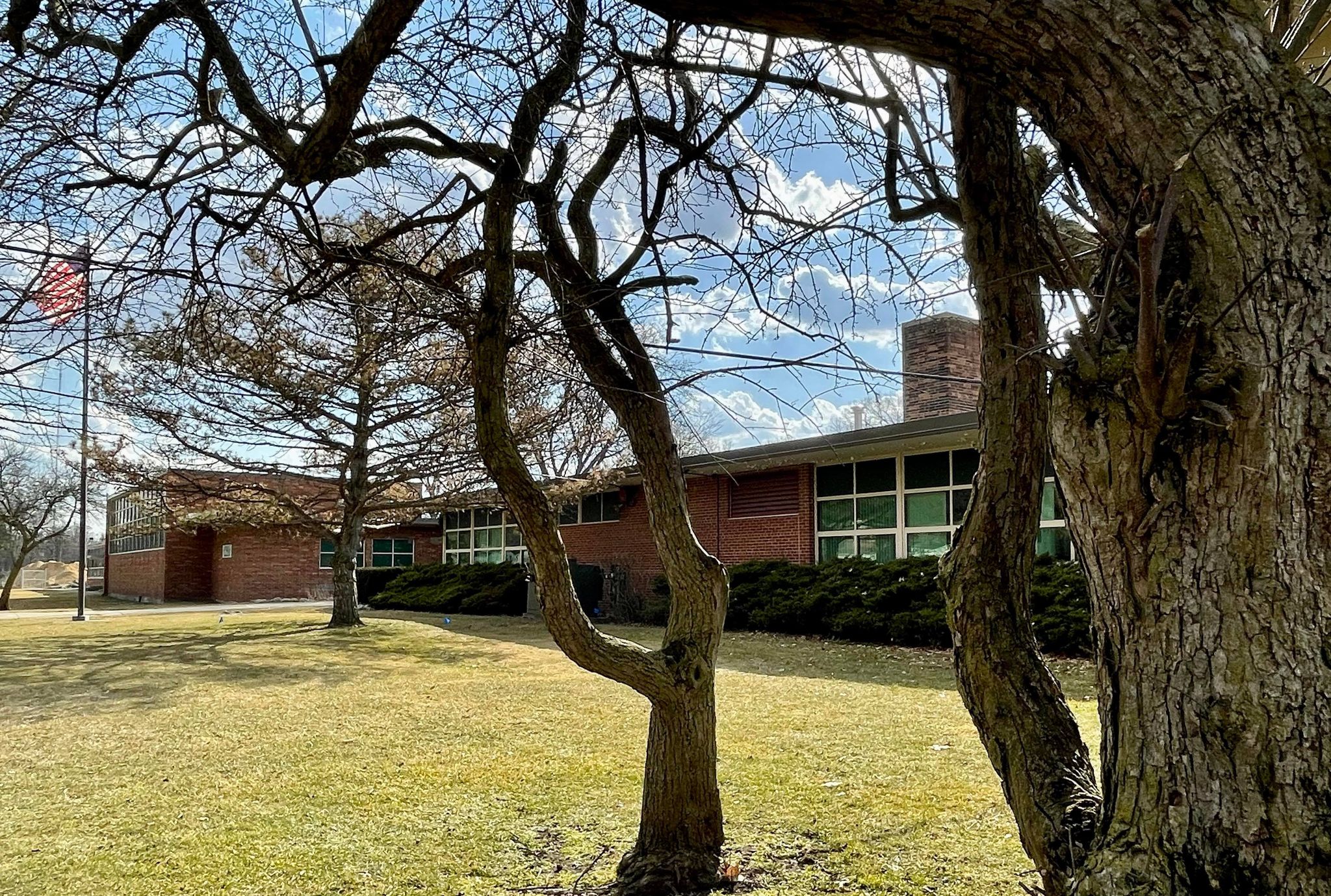
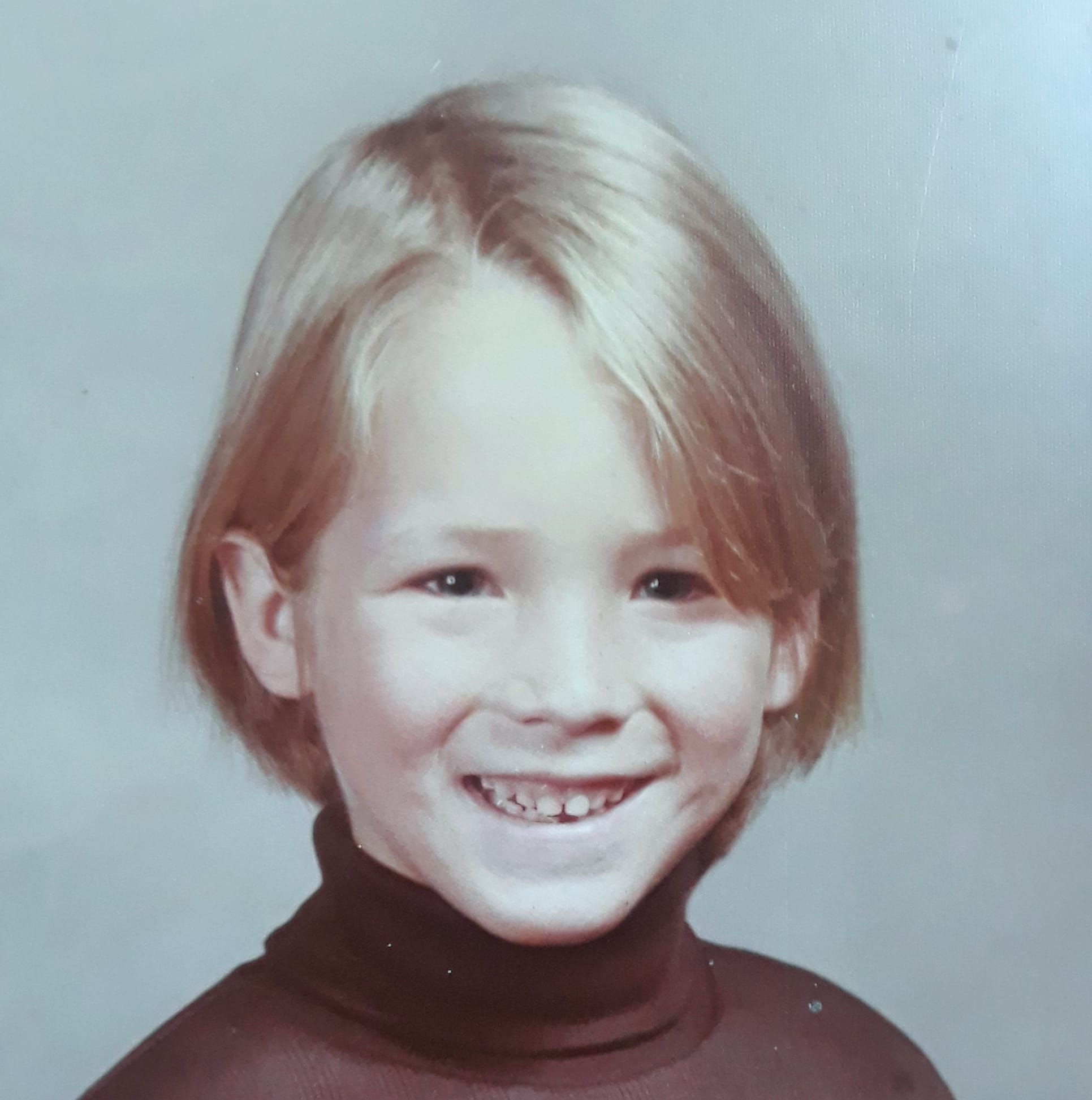
2nd grade, 1973
I was one of the fortunate ones. I ran in field day races, won flag football and baseball championships, played rummy and Monopoly, and learned my times tables in Mrs. Grady’s fourth grade class. My brain had developed in step with typical cognitive and social skills, according to the American Psychological Association website. Between the ages of 6 and 10, they say, I was “able to understand the viewpoints of others.” And I was “aware that others can have different thoughts.”
I have a distinct visual memory of Diane that lasted maybe two seconds, and yet that moment has mushroomed. The more years that have passed, the more my understanding of it expands, which is true with every memory. The few seconds that our minds capture a brief comprehension of an event may be remembered for 50 years or more, but the event itself is often the least significant part. The event itself stands as a thumbnail of what was happening all around it, particularly if those moments took place when we understood so little, as was the case for me at the age of nine in 1975.

I was alone when I left Mrs. Grady’s class. Recess had just started, and I was hurrying to the usual spot to meet other kids for the daily game of “catch John and Mike.” Mike and I both had several active, older brothers who undoubtedly honed our athleticism. After dark, we played a game called “cream ’em” on the neighbor’s lawn. The idea of the game was that one person would throw the ball straight up, and whoever ended up with it was chased and tackled by whoever could catch him. Playing cream ’em with brothers and friends older than Mike and I was perfect training for playing tag with a bunch of other little kids, so it soon became a game of “catch John and Mike.” Otherwise, either me or Mike would easily catch the other kids, making it boring.
The enormous playground was covered with wood chips that had been repurposed from local tree cuttings by the City of Oak Park. It wasn’t uncommon to get stabbed by sticks that made it through the chipper with dagger-like ends.

Up a slight incline, dozens of great oak trees stood opposite the school. All the usual structures stood with their time-worn solid steel: an 8-seat swing set, a tall slide with a hump in the middle, and a merry-go-round that was so heavy it took three or four of us little ones toiling in concert to get it going. By modern safety standards, once these things got going around, the weight and momentum would have been deemed “prohibited by law.”
On my way out to recess that day, Diane, a black girl one year older, had walked past me using two Lofstrand crutches that helped her support herself on two bent legs, a crooked body, and a big white-toothed smile. Her gait was uneven and labored. A Lofstrand crutch, or elbow crutch, is the type of forearm crutch that supports the weight of the body through the forearms instead of the underarms.
I had seen Diane around the school occasionally, but that was the first time we had made eye contact in close proximity. She, along with other children of all ages with disabilities, went to separate classrooms in Wing 2. Wings 1, 3, and 4 were for typically developing kids.
After bounding out the door and down a couple of steps, I looked up, our eyes met, and her whole face smiled. It startled me that her eyes were so inviting. In those two seconds, I also hadn’t expected that she would look like she understood even that we were making eye contact. If I hadn’t been thrown off by all of that, I might have smiled.

Whatever my observational skills at the time, it looked as if she understood the purpose of eye contact, and that it was more than a reflexive response that people have when they pass by. I learned later that we were both typically-developing kids, one of whom happened to have a severe physical disability. My two-second visual memory was Diane’s inviting eyes and big smile. My retrospective, 50-year cumulative memory saw myself unable to reply, with the invisible burden of dysfunctional social systems that constricted my response like a fat python around a small pig.
My parents had taught me to pay attention to my surroundings, but I was struck paralyzed and my typically developing brain couldn’t process what to do with Diane’s typically developing social awareness. I had believed that, because she was housed in Wing 2, she must have been unable to think. Or, as I would have said then, she was “retarded.” So, I walked past her without a word or a smile.

Soon after, I dreamt about Diane. It’s the earliest dream that I remember. I’m sure my brain was trying to make sense the day’s two-second event.
In the dream, I was walking toward Oak Park Park, a huge public space with two baseball fields, an ice rink, a significant wooded area, a full-sized pool, concession stands, and several playgrounds. I had played little league baseball and flag football there, so it’s no surprise that that was the direction my dream led me, but it was a couple miles away, and in the Motor City, few people walked more than a half-mile unless they had to, so actually, we rarely walked.
As I got close to the park, in front of an abstract version of the Oak Park police station, I saw a stairway that went into the ground. No signs, no railings, no apparent reason, but it did have the same carpet as my home: older and worn olive green shag carpet consistent with the times and the income of our household.
I walked down to the bottom of the stairwell to find two doorways without doors. They were immediately dark, the sunlight from above not seeping in more than a foot or two into the openings. I had no idea where they led, but I did know that one led to good and the other to evil. I had that inexplicable understanding we sometimes have in dreams where we just know. I also knew that I had to choose one of the two doorways, enter, and my fate would be determined. It was the right choice, or it was the wrong one.
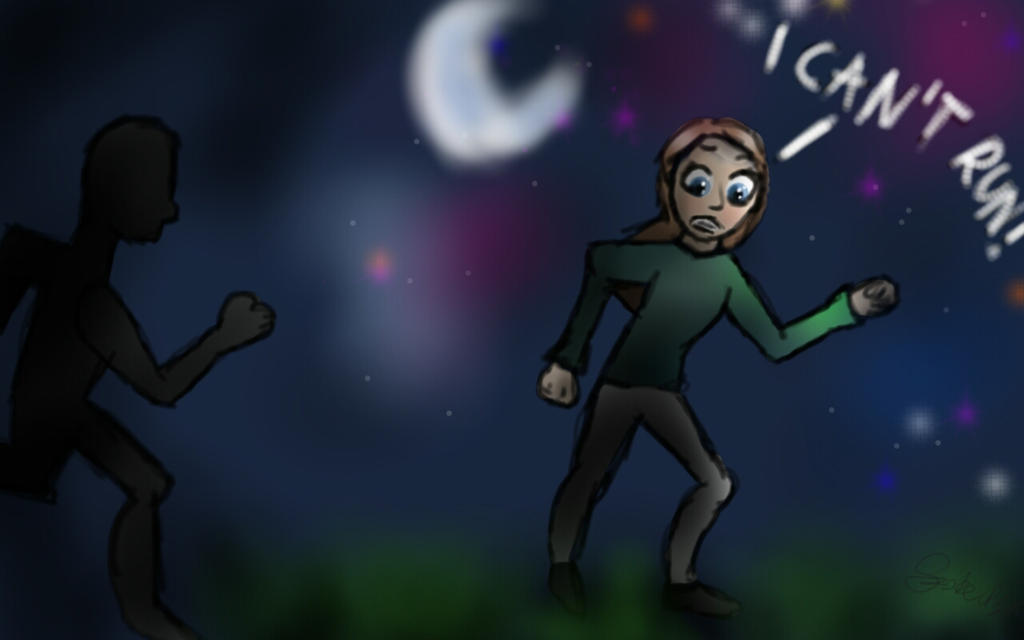
Before I made the decision, Diane came out of the left door. I don’t remember seeing her clearly, like I had that morning, but I knew it was her. I quickly deduced that she came out of the evil doorway, so I turned around, and tried to run back up the stairs to safety. My feet felt like they were made of lead and had deadened my legs. I couldn’t escape. I made it three or four stairs, dreading that Diane would catch me. And then I awoke with a start.
The two seconds of Diane’s exuberance walking past me 50 years ago is alive in my memory.
In scattered and blurry fragments, I remember seeing her go in and out of Wing 2 and spend her recess on that side of the chain-link fence.
And one night, she chased me up the olive green carpeted stairs, presumably intending to drag me back to my fate with evil through door #1.

Why did I dream about Diane symbolizing evil when I had my first authentic exchange with her, however brief? Was this how my childhood ignorance manifested itself? With no explanation for Diane’s affliction, and despite having almost no religious upbringing, ascribing the responsibility to the Devil?
I had not questioned that the authorities at Jackson Elementary for isolating Diane and other non-typically developing children because they were so unlike the rest of us. I could see they were in wheel chairs or were permanently attached to Lofstrand crutches, and that they otherwise appeared different from me. Gary’s mysterious cerebral palsy and Diane’s still unnamed impairment produced similar physical motions, of which me and some of my friends would say, “Let’s act retarded,” and then we would mimic their angled bodies. In 1975, that word was normal and accepted language, and, importantly, it was all-encompassing:
It meant that the kids who were administratively socked away in Wing 2 may or may not have had a physical disability, but it was a foregone conclusion that they couldn’t think very well. Diane included.
I had never met the students in Wing 2, so I was in the dark about their abilities or disabilities. The all-encompassing label cemented the illusion that, ultimately, they were all the same: unaware of silliness, humor, amazement, music, joy, fairness, and a basic understanding of words and gestures and emotions, let alone ideas. The notion that we could have been friends was distant, as if she were a leper in 15th century Europe. She was on the other side of the fence by Wing 2, but she might just as well have been living in the Middle Ages.
They were “other” people, and yet Diane saw me. Being a generally friendly boy, it was clear to me that what I saw in Diane’s face in those two seconds meant that we could have at least been friendly with each other. Had Diane and the others been included in our classrooms, would she have been much different than any of my classmates.
With new accumulating knowledge, my memory had changed what happened during those two seconds. Outside of those two seconds, Diane and I had little chance of being friends, or even friendly. I wasn’t able to empathize or give special consideration to those who were different than me. Every system in our 1975 Oak Park community made sure of it:
The chain-link fence was built to isolate her and to free me.
The physical separation of their classrooms were well-signed in the hallways.
My friends and I thought it was normal to mimic and mock Diane and her peers.
The entertainment culture rarely integrated “others” into so-called normal society.
The policies of exclusion were constructed by old-world educators of that century.
All of it eclipsed our two seconds of eye contact. Empathy and special consideration didn’t stand a chance.
Nothing can be done about the reality of our systems during the 1970’s, but the remnants of Medieval social structures are evident. 1425 and 1974 were in most respects incomparable, but they way that typically developing people cared for non-typically developing people bore resemblances.
I will remember the Diane behind Wing 4 at the beginning of recess that one day. I will remember her wide smile, energetic body language, kindness, and her friendliness.
Had there not been a canyon between us assembled by the adults in that school, that district, and perhaps in all public schools (assembled? Or neglected? play with that) across America, I might have had hours, days, weeks, or possibly years of memories with Diane, whatever our relationship.
Decades later, I will settle for those two seconds.
In 1975, when Congress passed the Education for All Handicapped Children Act, education for all children with disabilities changed dramatically. Regardless of the type or degree of disability, each school-aged child had the right to a “free appropriate public education.”
1 “The Blind Beating the Blind: An Unidentified ‘Game’ in a Marginal Illustration of the Romance of Alexander“, MS Bodley 264, Edward Wheatley, University of Chicago Press, 2005. Originally published in the Journal of the Warburg and Courtauld InstitutesVolume 68, Number 1.
2 Carole Rawcliffe, Leprosy in Medieval England. Rawcliffe was an editor on the History of Parliament Trust (1979-92), Senior Wellcome Trust Research Fellow at the University of East Anglia (1992-7). She was made Reader in the History of Medicine (1997-2002) and Professor of Medieval History (2002) and became Professor Emeritus of Medieval History (2015).
2 Carole Rawcliffe, Leprosy in Medieval England. Rawcliffe was an editor on the History of Parliament Trust (1979-92), Senior Wellcome Trust Research Fellow at the University of East Anglia (1992-7). She was made Reader in the History of Medicine (1997-2002) and Professor of Medieval History (2002) and became Professor Emeritus of Medieval History (2015).
3 Rawcliffe, Carole, Leprosy in Medieval England.
4 Adam Davis, from his article in Denison University’s Online History website: “Sweet Charity and Medieval Guilt”, August 21, 2013.
History CompassVolume 9, Issue 1
First published: 04 January 2011
Written April 17, 2022
I love how stable the platform is. No glitches and the graphics are stunning. I am spending way too much time on vnwh88 lately.
Pingback: this tadalafil PK guide
The payouts are fair and the games are top notch. I have told all my friends to join pkpion777
Top tier experience for anyone looking to make some extra cash. The rewards program is very generous. Glad I found pkrich888.